Goyal's US Visit: Navigating Tariff Challenges Amid New Sanctions
Commerce Minister Piyush Goyal's trip to the US aims to secure a tariff advantage for India amidst evolving trade dynamics and new sanctions on Russia.
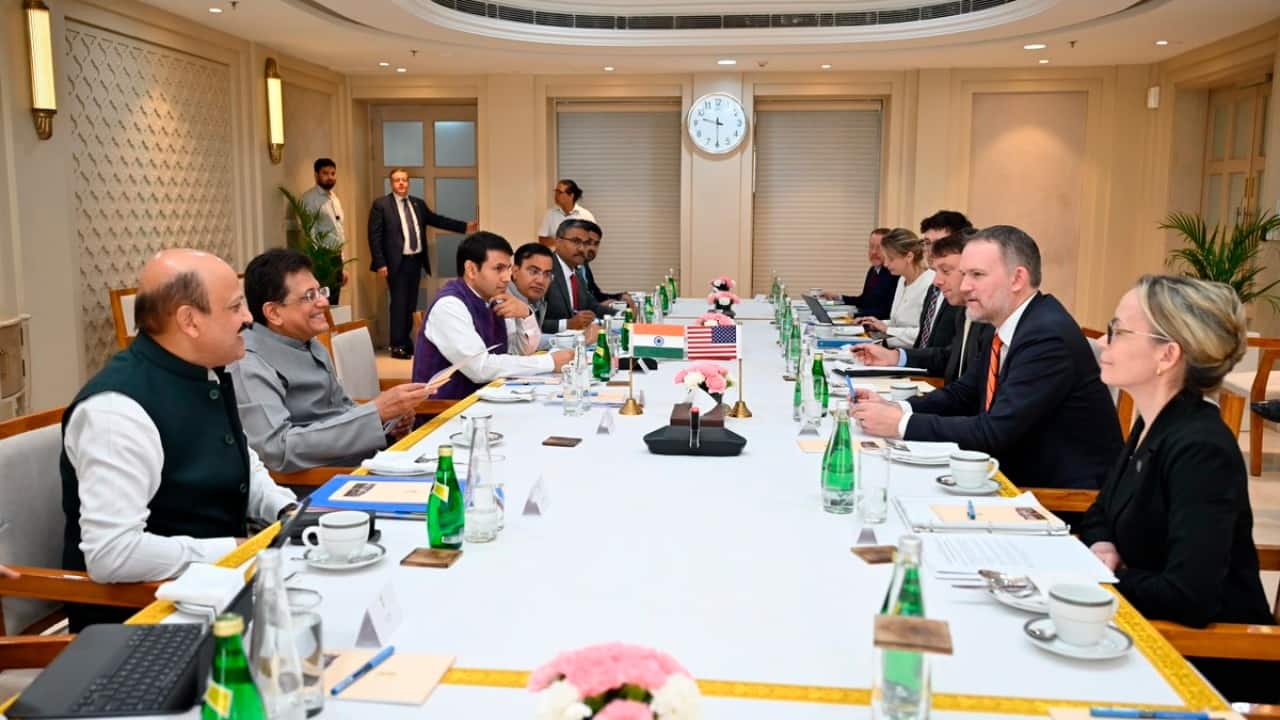
Goyal's discussions focus on achieving preferential tariffs for Indian exporters.
Recent US sanctions on Russia introduce uncertainty in trade negotiations.
India seeks to enhance its competitive position against rival exporters like Vietnam and Bangladesh.
Commerce and Industry Minister Piyush Goyal is set to visit the United States from September 29 to October 5, aiming to secure a preferential tariff position for Indian exporters. This visit coincides with India's ongoing efforts to negotiate a bilateral trade agreement (BTA) with the US, which has been complicated by new sanctions imposed on Russia. Goyal will also participate in the G20 ministerial meeting during this trip, where he is expected to discuss the tariff differences that have hindered an interim deal.
The backdrop of Goyal's visit includes the first-phase interim trade framework established in February, where the US agreed to impose an 18 percent reciprocal tariff on a range of Indian goods. In return, India committed to reducing tariffs on US industrial and agricultural products. However, the landscape has shifted since then, with significant changes in the US tariff regime and the introduction of Russia-related legislation that could impact trade dynamics further.
The US Supreme Court's ruling in February, which limited the use of the International Emergency Economic Powers Act for imposing tariffs, has led to a new tariff structure that includes additional duties under Section 301. This has raised concerns for India, as the Section 301 duty adds another layer of complexity to the already intricate tariff landscape. Furthermore, the recent sanctions law signed by President Trump allows for potential tariffs of up to 100 percent on countries purchasing Russian oil or gas, which could affect India's trade position given its reliance on Russian crude.
India's primary goal in these negotiations is to secure a comparative tariff advantage over competitors such as Vietnam, Bangladesh, and Thailand, particularly in labor-intensive sectors. A favorable tariff rate would enhance India's pricing power in the US market, crucial for maintaining its export orders. The Indian government emphasizes the need for tariff predictability, as sudden changes can disrupt manufacturing and investment decisions.
Looking ahead, the outcome of Goyal's discussions will be pivotal in shaping the final BTA. Both sides are committed to finalizing the agreement, but the unresolved tariff structure remains a significant hurdle. The meeting will likely address key issues such as tariff rates, product exemptions, and the implications of the new sanctions on trade. As India navigates these complexities, the focus will be on ensuring that Indian exporters gain a meaningful competitive edge in the US market.


