NASA's Roman Telescope Captured in Night Sky Timelapse
Astrophotographer Andrew McCarthy documents NASA's new telescope as it embarks on its mission to explore deep space.
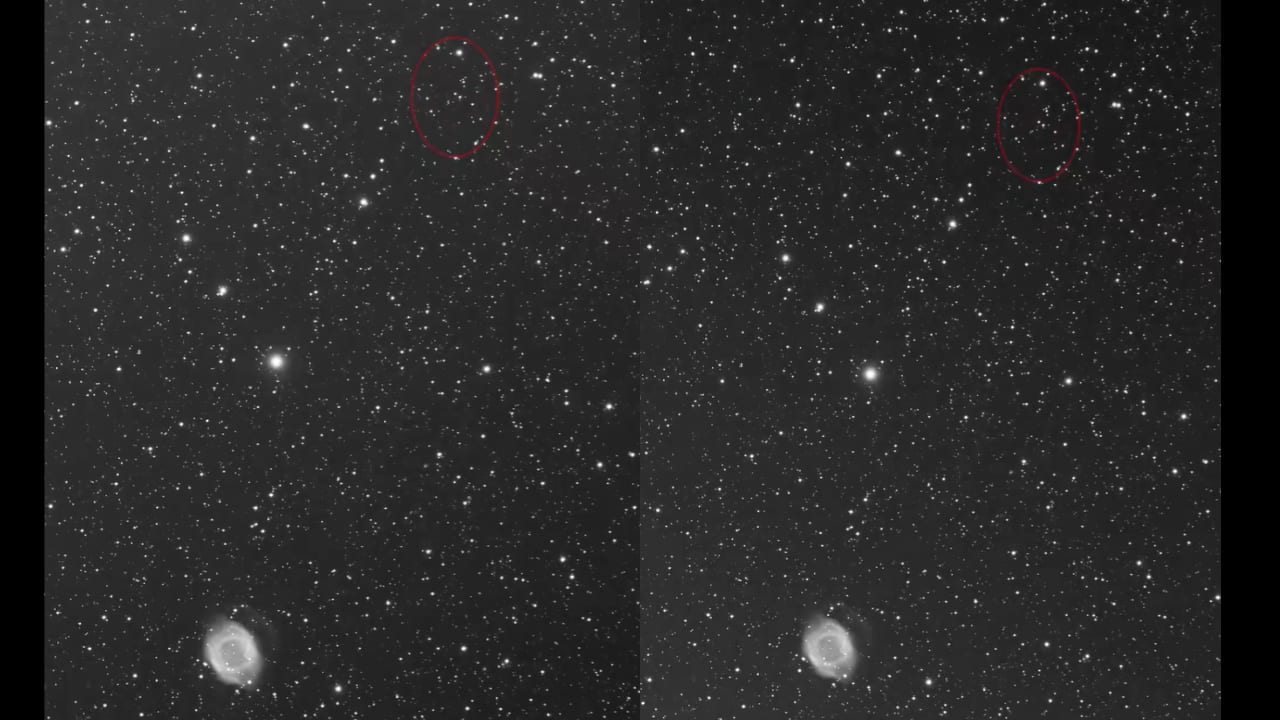
NASA's Nancy Grace Roman Space Telescope was launched on August 30.
The telescope will operate around the L2 point, approximately 1.5 million kilometers from Earth.
It is designed to survey the universe 1,000 times faster than the Hubble Space Telescope.
In a remarkable display of technology and exploration, NASA's Nancy Grace Roman Space Telescope has been spotted in a timelapse captured by astrophotographer Andrew McCarthy. This sighting occurred shortly after the telescope's launch on August 30, 2026, from NASA's Kennedy Space Center in Florida. The telescope is currently on a trajectory towards the second Sun-Earth Lagrange point, known as L2, which is situated about 1.5 million kilometers from our planet.
McCarthy, based in Arizona, shared the timelapse footage on September 8, showcasing the telescope as a faint moving dot among countless stars. This image starkly contrasts the telescope's ambitious mission to survey vast portions of the sky. In addition to the Roman telescope, McCarthy noted the presence of asteroid 9 Metis in the frame, highlighting the dynamic nature of the cosmos.
The Roman Space Telescope was launched aboard a SpaceX Falcon Heavy rocket and separated from the launch vehicle approximately 31 minutes post-liftoff. Unlike a mere distant point in space, L2 will serve as a stable orbit for the telescope, allowing it to conduct scientific observations effectively. NASA's James Webb Space Telescope also operates in this region, but Roman is specifically designed to cover large areas of the sky rapidly.
Equipped with a 300-megapixel infrared camera, the Roman telescope is expected to survey the universe at a pace 1,000 times faster than that of the Hubble Space Telescope. Its mission includes investigating dark matter, dark energy, galaxies, black holes, and exoplanets. As of now, the telescope is still in its commissioning phase, with successful deployment of essential components like solar panels and antennas already confirmed by NASA.
Looking ahead, NASA anticipates that the Roman telescope will reach its operational orbit within three months, with the first scientific images expected to be released in early 2027. For now, McCarthy's timelapse offers a unique glimpse of this groundbreaking spacecraft, which, although appearing as a mere dot from Earth, represents a significant advancement in our quest to understand the universe.


