NASA Unveils New Roman Space Telescope to Explore Cosmic Mysteries
NASA's latest astronomical observatory, the Roman Space Telescope, launched successfully to investigate dark energy and exoplanets.
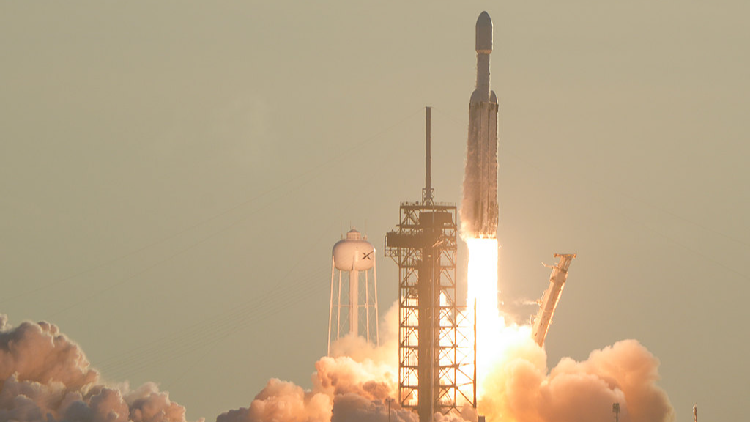
The Roman Space Telescope was launched on August 30, 2026, from Florida.
This $4 billion project aims to explore dark matter and cosmic phenomena.
It can survey the Milky Way galaxy in one month, a task that would take Hubble a century.
NASA successfully launched its new flagship astronomical observatory, the Nancy Grace Roman Space Telescope, on August 30, 2026. The launch took place from the Kennedy Space Center in Cape Canaveral, Florida, using a SpaceX Falcon Heavy rocket. This mission marks a significant step in understanding some of the universe's most profound mysteries.
The Roman Space Telescope, a project valued at approximately $4 billion, is set to delve into cosmic enigmas such as dark energy and dark matter. Additionally, it will test the principles of gravity across vast distances and search for exoplanets—planets located outside our solar system. The telescope's operational journey will take it to Lagrange Point 2, approximately one million miles from Earth, with a planned mission duration of five years, potentially extendable by another five years depending on fuel availability.
This telescope builds upon the advancements made by previous space observatories, including the James Webb Space Telescope, which was launched in 2021, and the Hubble Space Telescope, which has been operational since 1990. Nicola Fox, the chief of NASA's Science Mission Directorate, emphasized the telescope's capabilities, stating that it will provide a more comprehensive view of the universe compared to its predecessors.
Julie McEnery, the senior project scientist for Roman at NASA's Goddard Space Flight Center, highlighted the telescope's efficiency, noting that a month of observations with Roman could cover the entire Milky Way galaxy. In contrast, she pointed out that such a survey would take about a century with Hubble, showcasing Roman's enhanced observational power.
As the Roman Space Telescope embarks on its mission, it is expected to significantly advance our understanding of the cosmos. The implications of its findings could reshape our knowledge of fundamental astrophysical concepts and the nature of the universe itself. Looking ahead, the scientific community eagerly anticipates the data and insights that will emerge from this ambitious project over the coming years.


