NASA Unveils Stunning Images of All Eight Planets
NASA's decades-long missions reveal breathtaking views of the solar system's planets, showcasing their unique characteristics.
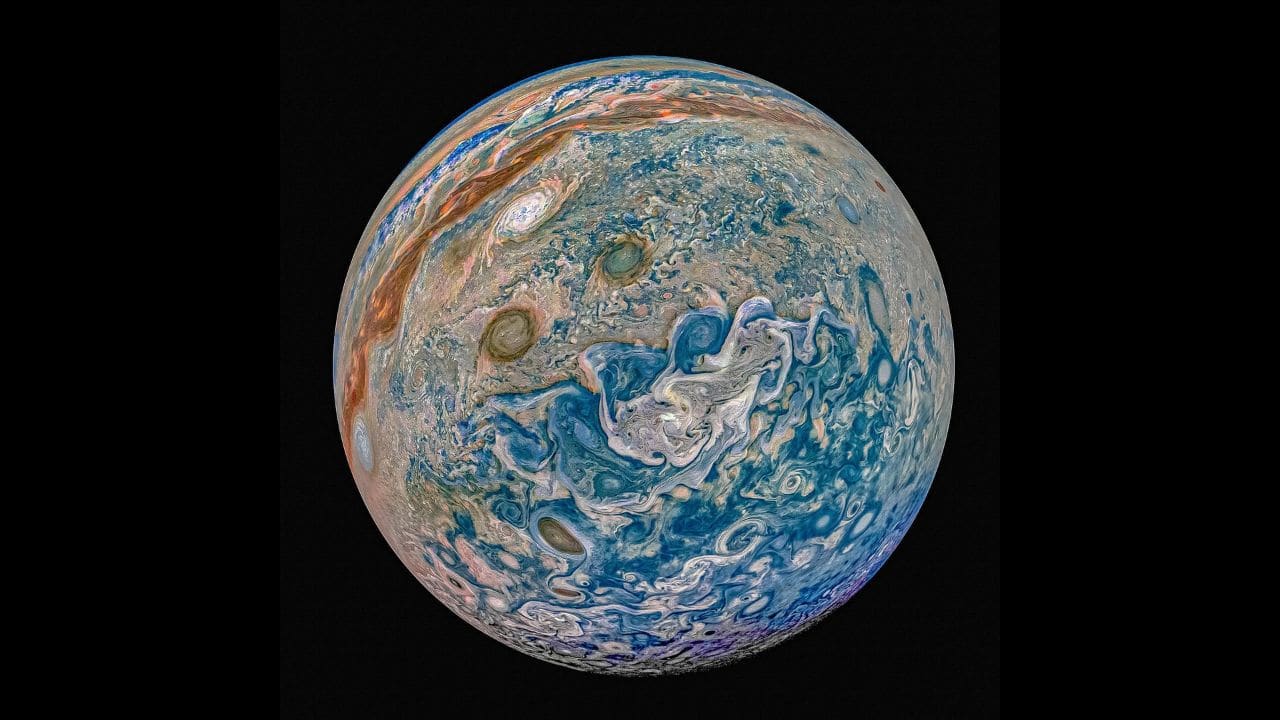
NASA has captured detailed images of all eight planets through various missions.
The images highlight the vast differences in size and appearance among the planets.
NASA's montages illustrate decades of exploration, transforming planets into detailed worlds.
NASA has released a remarkable collection of images showcasing all eight planets in our solar system, captured through years of robotic missions. These stunning visuals range from the cratered surface of Mercury to the swirling clouds of Neptune, allowing humanity to appreciate the diversity of worlds that orbit our Sun.
The eight planets—Mercury, Venus, Earth, Mars, Jupiter, Saturn, Uranus, and Neptune—have been photographed by various NASA spacecraft over several decades. A newly compiled montage presents these images side by side, offering a comparative view of their sizes and appearances. Each planet's unique features are highlighted, emphasizing the stark contrasts between them despite their shared solar orbit.
Among the notable images, Voyager 2 captured Neptune from a distance of 4.4 million miles, revealing its Great Dark Spot and other atmospheric phenomena. Hubble's observations of Uranus showcased its four prominent rings and numerous moons, while Voyager 1's historic photograph of Saturn included its iconic rings. Additionally, JunoCam's enhanced image of Jupiter, taken during a close pass, illustrated the planet's striking colors and patterns.
These images not only provide a visual feast but also represent significant advancements in space exploration. NASA's efforts have transformed our understanding of these celestial bodies, turning them from mere points of light into complex worlds that can be studied in detail. The size differences are significant; for instance, Jupiter's diameter is about 11 times that of Earth, while Saturn is roughly nine times larger.
Looking ahead, NASA continues to expand its archive of planetary images, further enriching our understanding of the solar system. The agency's ongoing missions promise to deliver even more insights into these distant worlds, ensuring that the exploration of our solar neighborhood remains a vibrant area of scientific inquiry.


