Rubin Observatory Unveils Detailed View of COSMOS Field
The Vera C. Rubin Observatory has captured the most intricate images of the COSMOS field, revealing a wealth of galaxies and celestial phenomena.
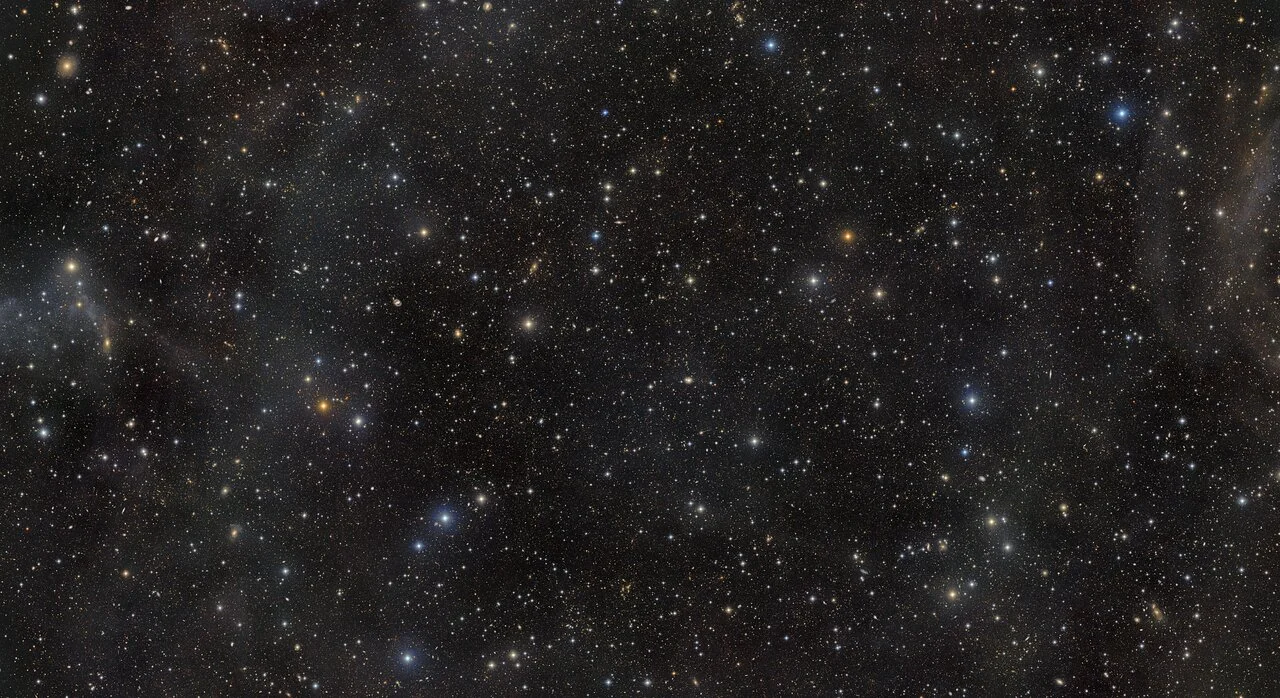
The Rubin Observatory's LSST Camera has produced a groundbreaking image of the COSMOS field.
This region has been a focal point for astronomical studies for over two decades.
The new observations will aid in understanding cosmic evolution and the universe's structure.
The Vera C. Rubin Observatory has recently provided an unprecedented view of the COSMOS field, a renowned area in the universe located in the Sextans constellation. This field, previously photographed by the Hubble Space Telescope between 2003 and 2005, has now been captured in remarkable detail by the observatory's Legacy Survey of Space and Time (LSST) Camera, which is recognized as the world's most powerful digital camera.
For over twenty years, astronomers have extensively studied the COSMOS field, utilizing various telescopes to observe it across multiple wavelengths, including optical and X-rays. This extensive research has established the field as a benchmark for testing new astronomical instruments and methodologies. The Rubin Observatory's latest imaging combines high sensitivity and wide-field coverage, allowing for repeated observations that enhance the understanding of this significant cosmic area.
Phil Marshall, Deputy Director of the Rubin Observatory, emphasized the importance of the COSMOS field for LSST science, noting its rich history of observations and its role as a testing ground for future surveys. The LSST Camera's capabilities will complement earlier studies, offering a dynamic perspective that enables astronomers to track distant galaxies and observe changes in the universe over time.
The newly released image coincides with the Early Data Preview 2 (EDP2) phase of Rubin's data release, showcasing observations made between April 2005 and January 2026. Bob Blum, Director of the Rubin Observatory, highlighted that this deep image is just the beginning, with future visits planned to uncover transient and variable astronomical objects, such as supernovae, for further investigation.
While the EDP2 serves as a preview of the extensive ten-year LSST survey, it holds intrinsic scientific value. The detailed observations of the COSMOS field will not only facilitate the validation of Rubin's observational tools but also prepare scientists for the comprehensive survey ahead. Blum also expressed solidarity with the local community in Chile affected by recent storms, dedicating the image to them as a gesture of gratitude for their support of astronomy and the AURA Observatories.


