India Responds Firmly to Erdogan's Kashmir Comments at UNGA
India has firmly rejected Turkish President Erdogan's remarks on Kashmir during the UN General Assembly, asserting its territorial integrity.
India's Ministry of External Affairs condemned Erdogan's comments on Kashmir.
Erdogan has raised the Kashmir issue multiple times since 2019.
India insists that Jammu and Kashmir is an integral part of the nation.
India has taken a strong stance against Turkish President Recep Tayyip Erdogan's recent comments regarding Jammu and Kashmir made during the 81st United Nations General Assembly. The Ministry of External Affairs (MEA) emphasized that no external entity has any authority over India's territorial matters, reiterating the nation's commitment to its sovereignty.
In response to Erdogan's statements, MEA spokesperson Randhir Jaiswal stated on Tuesday, "India rejects the unwarranted references to India and the Indian Union Territory of Jammu and Kashmir made by the President of Turkey during his address to the UN General Assembly." He further clarified that the issue pertains to India's territorial integrity, asserting that external parties have no standing in this matter.
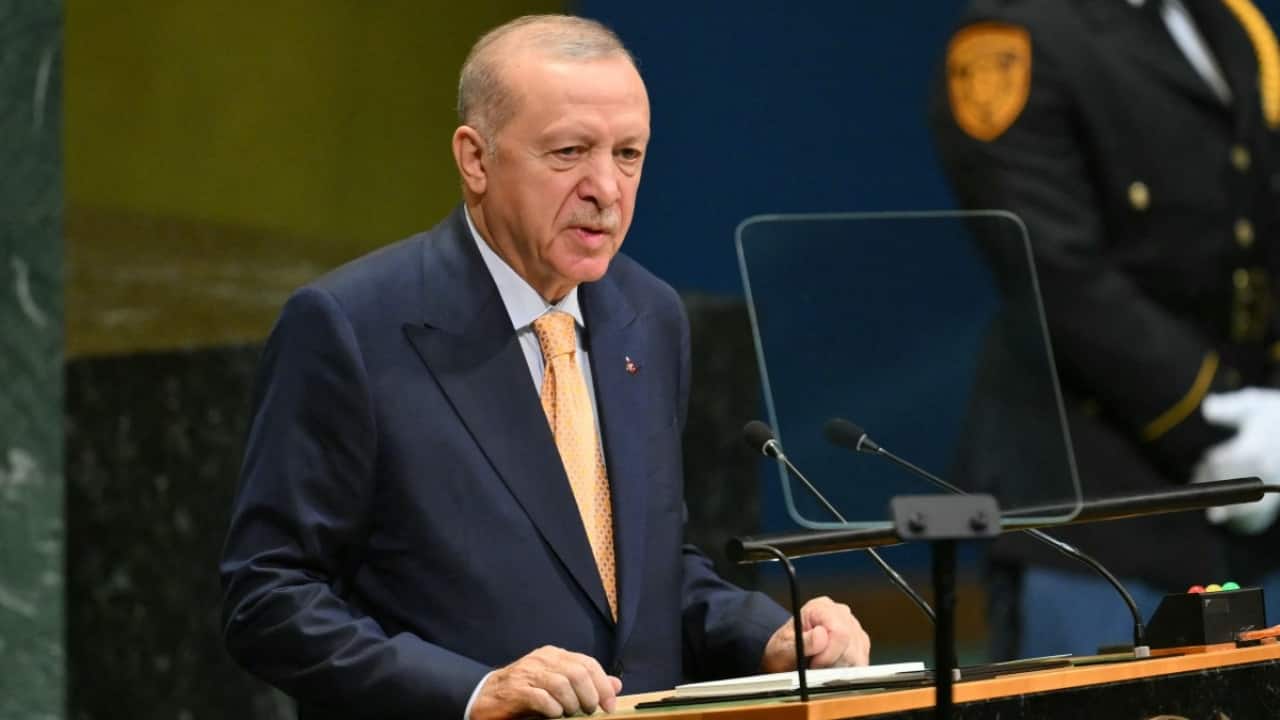
Erdogan addressed the Kashmir issue during his speech at the UNGA, advocating for resolution through dialogue in accordance with the UN Charter. He remarked, "In South Asia, it is important that all disputes, including the Kashmir issue, be addressed through dialogue within the framework of the United Nations Charter and of relevant resolutions." This marked the seventh occasion since 2019 that Erdogan has brought up the Kashmir issue at the UN, following India's revocation of Jammu and Kashmir's special status.
India has consistently rejected Erdogan's references, maintaining that Jammu and Kashmir is an integral part of the country. New Delhi has reiterated that any disputes between India and Pakistan should be resolved bilaterally, in line with the 1972 Shimla Agreement. Furthermore, India has linked meaningful dialogue with Pakistan to a cessation of cross-border terrorism, underscoring its position on national security and sovereignty.
Looking ahead, India is likely to continue its diplomatic efforts to counter external interference in its internal matters. The government remains steadfast in its approach, emphasizing the importance of bilateral dialogue with Pakistan while firmly rejecting any international mediation on the Kashmir issue. As geopolitical dynamics evolve, India’s response to such remarks will be closely monitored by international observers and regional stakeholders.