Allen Chen Discusses Tumor-Agnostic Therapy at COGC 2026
At the Community Oncology Global Congress 2026, Allen Chen outlines the evolution of biomarker-based therapies and the shift towards tumor-agnostic treatments.
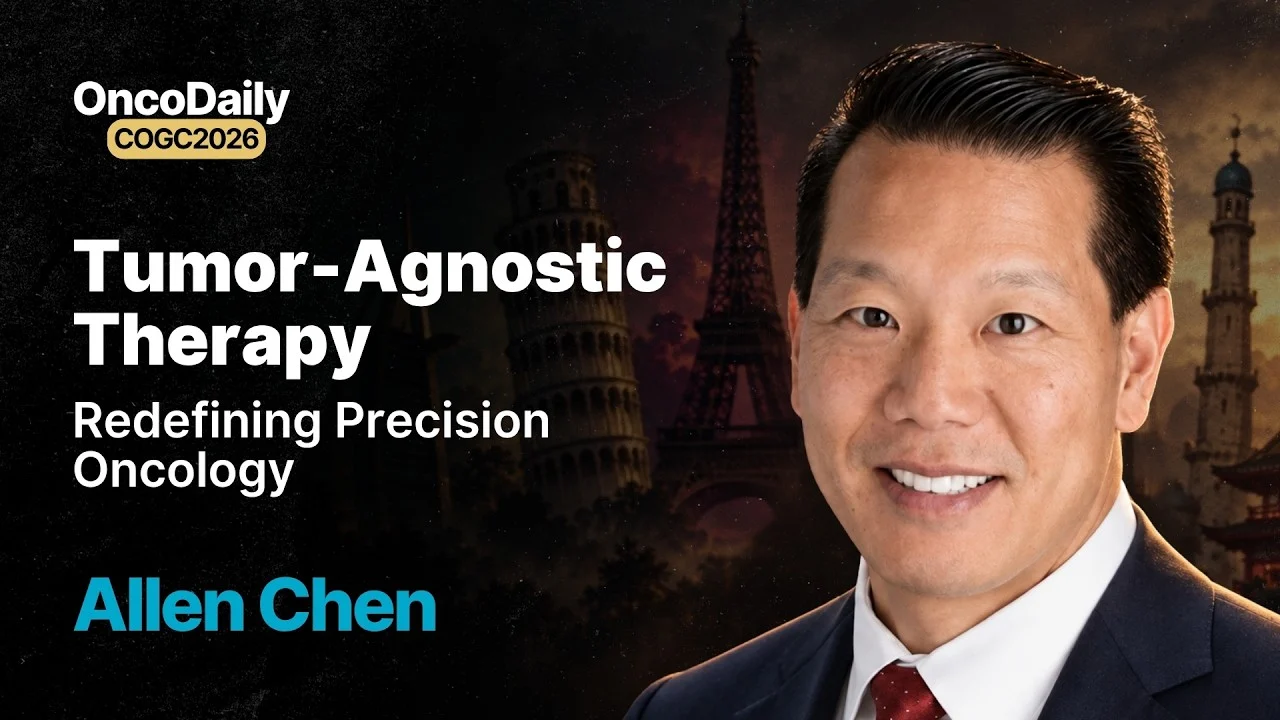
Biomarker-based therapies have evolved significantly, impacting cancer treatment.
Liquid biopsy offers a minimally invasive method for capturing tumor information.
Tumor-agnostic therapies focus on molecular alterations rather than tumor origin.
During the Community Oncology Global Congress (COGC 2026), Allen Chen, a leader in Oncology Diagnostics at BillionToOne, presented a comprehensive overview of the advancements in biomarker-based cancer therapies. His talk highlighted the historical journey of cancer treatment, emphasizing the transition from early cancer markers to sophisticated techniques like next-generation sequencing and tumor-agnostic therapies.
The evolution of cancer biomarkers dates back to 1846 with the discovery of Bence Jones proteins, leading to significant milestones in cancer treatment. Over the decades, the identification of hormone receptors and other biomarkers has transformed oncology, paving the way for targeted therapies. The last thirty years have seen a rapid advancement in precision oncology, particularly with the introduction of biomarkers linked to specific therapies, such as HER2 and EGFR, which have become crucial in modern cancer treatment.
Chen elaborated on the role of liquid biopsy, which has gained prominence due to its ability to provide molecular insights through a simple blood test. This method not only reduces the need for invasive tissue biopsies but also captures the genetic diversity of tumors, offering a more comprehensive view of the cancer's molecular landscape. Liquid biopsy is particularly advantageous in scenarios where tissue samples are limited or when rapid results are necessary for treatment decisions.
The concept of tumor-agnostic therapy represents a paradigm shift in cancer treatment, moving away from traditional organ-specific approaches. Instead, treatment is now guided by molecular biomarkers that can exist across various cancer types. Chen noted that there are currently eight FDA-approved tumor-agnostic therapies, underscoring the importance of matching specific biological alterations with appropriate treatments. However, he cautioned that the same molecular changes can yield different responses in different cancers, highlighting the complexity of tumor biology and the need for ongoing research.
Looking ahead, the future of oncology will likely involve more integrated approaches, where molecular profiling informs treatment selection across tumor types. As the field evolves, the challenge remains to identify when a biomarker is robust enough to guide therapy across different cancers, ensuring that the unique biology of each tumor is also considered in treatment planning.