Brazil's AgTech Valley: Innovations in Bio-Inputs Transforming Farming
Brazil's AgTech Valley is revolutionizing agriculture with bio-inputs that leverage fungi and bacteria for sustainable farming practices.
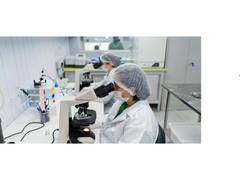
AgTech Valley hosts over 1,000 agribusiness entities focused on innovation.
Genica develops biological solutions to enhance crop health and reduce chemical reliance.
Research aims to improve nutrient availability and reduce fertilizer imports in Brazil.
Brazil's AgTech Valley, a burgeoning hub for agricultural innovation, is rapidly gaining recognition as a center for developing sustainable farming technologies. With more than 1,000 companies, universities, and research institutions collaborating, this region is at the forefront of integrating advanced agricultural practices tailored for tropical climates. The focus on bio-inputs, which utilize living microorganisms like fungi and bacteria, is particularly noteworthy as it aims to enhance crop health and manage pests effectively.
Founded in 2015 in Piracicaba, Genica is one of the key players in this innovative landscape. During a recent press tour organized by ApexBrasil, representatives from Genica emphasized the strategic advantage of being close to prominent research institutions such as the University of Sao Paulo and Embrapa. This proximity fosters a collaborative environment that accelerates research and innovation in agricultural technologies.
The tropical climate of Brazil presents unique challenges, including year-round pest and disease proliferation, which can lead to increased resistance to chemical pesticides. To combat this, researchers at the Piracicaba campus of USP are investigating plant genetics and microorganisms to bolster crops against environmental stressors. Their work includes enhancing plants' natural defense mechanisms instead of solely targeting pathogens directly.
Genica employs cutting-edge techniques like artificial intelligence and DNA sequencing to discover microorganisms that can perform specific agricultural functions. Their approach also includes developing fermentation-based products that utilize substances produced by microorganisms, minimizing the need for live applications on crops. This innovation is crucial as Brazil seeks to reduce its reliance on imported fertilizers, with ongoing research into fungi and bacteria that can enhance phosphorus availability in soils and improve nitrogen fixation.
The potential impact of these advancements is significant. Genica projects that improved biological solutions could lead to a 40 to 50 percent reduction in nitrogen use for crops like sugarcane and corn over the next five years, with phosphorus use potentially decreasing by 20 to 40 percent. While bio-inputs are not intended to fully replace chemical fertilizers, they are seen as complementary tools that can enhance farming practices. The collaboration between academia and industry in Piracicaba exemplifies how scientific research can translate into practical agricultural technologies, paving the way for more sustainable and efficient farming in Brazil.