ESA's 2026 Space Environment Report Highlights Urgent Debris Crisis
The European Space Agency warns of a significant increase in space debris, urging immediate action to ensure the sustainability of space activities.
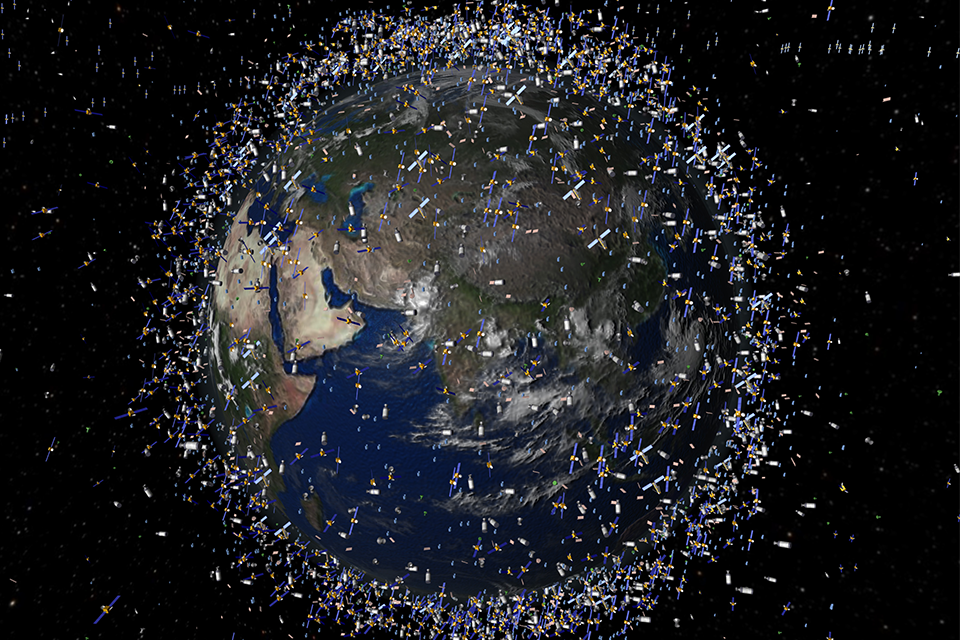
ESA reports a daily average of three intact satellites reentering Earth's atmosphere.
The number of objects in low Earth orbit is projected to rise dramatically, with increasing collision risks.
Active debris removal initiatives are essential to prevent future orbital hazards.
The European Space Agency (ESA) has released its annual Space Environment Report, emphasizing a critical situation regarding space debris and the sustainability of spaceflight. The report highlights that the number of commercial satellite constellations is on the rise, yet insufficient measures are being taken to remove defunct satellites from congested orbits, thereby heightening the risk of collisions in low Earth orbit.
According to the report, an average of three intact satellites or rocket bodies reenter the Earth's atmosphere daily, while ten new payloads are launched each day. ESA warns that this trend is leading to a concerning increase in the number of objects and potential collisions in space, with projections indicating a runaway effect that could see the number of debris escalate significantly over the next century.
ESA stresses the necessity for active debris removal to halt the growing number of space debris, which can create new fragments through collisions. The report indicates that even if no new satellites are launched, the debris population will continue to grow due to fragmentation events that produce debris faster than it can naturally reenter the atmosphere. This situation poses a risk of making certain orbital regions unsafe and potentially unusable over time.
The report also points to a rising number of unidentified objects in orbit, highlighting a gap between detected fragments and those that are catalogued. A new metric for 2026 has been introduced to assess the risk of on-ground casualties from reentries, noting that while the overall risk remains low, the chances of incidents have increased due to heightened space traffic.
ESA acknowledges that while there is a growing interest in space debris mitigation, more consistent and reliable actions are needed to address the issue effectively. The agency is currently developing several missions aimed at combating debris generation, including new techniques for passivation, preventing in-orbit break-ups, and conducting demonstrations for active debris removal and servicing in orbit.