Discovery of 12,000 Ancient Eukaryote Fossils in Australia
A groundbreaking find in northern Australia reveals over 12,000 ancient eukaryote fossils, shedding light on early complex life.
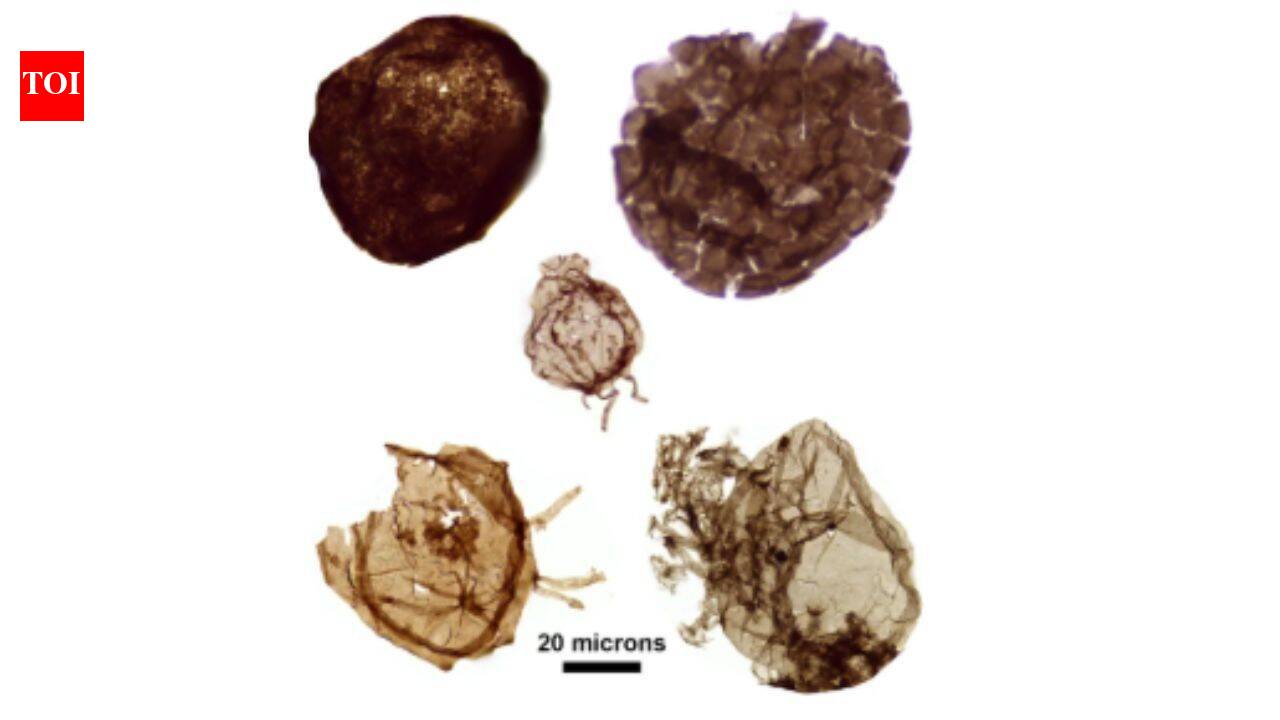
Researchers discovered more than 12,000 eukaryote fossils in 1.7-billion-year-old rocks.
The fossils indicate that complex cellular life existed long before animals evolved.
The study suggests that oxygen played a crucial role in the evolution of early eukaryotic organisms.
In a remarkable discovery, scientists have unearthed over 12,000 microscopic fossils from 1.7-billion-year-old rocks in northern Australia, providing significant insights into the early history of complex life. These fossils belong to ancient eukaryotes, a diverse group that encompasses animals, plants, fungi, and algae. This finding is particularly notable as these organisms existed long before the emergence of animals, showcasing a level of cellular complexity that surpasses that of bacteria and archaea.
The fossils were extracted from cylindrical rock cores housed in an open-air facility in Darwin, Australia. These cores, collected decades ago by mineral exploration companies, were initially intended for geological resource assessments rather than biological studies. The mudstone from which the fossils were derived formed from hardened seafloor sediment over 1.4 billion years ago, during a period when a vast inland sea covered much of northern Australia. Researchers revisited these cores to investigate the origins of complex cells, leading to this significant find.
Upon analyzing the mudstone, scientists crushed samples and dissolved them, revealing organic residues that were examined under a microscope. This meticulous process led to the identification of more than 12,000 fossils, allowing for comparative studies across different layers and environmental contexts. The findings, published in the journal Nature, indicate that these ancient eukaryotes thrived in oxygen-rich environments, ranging from coastal mudflats to open seas, while simpler microbial forms were found in oxygen-free samples.
The implications of this discovery extend beyond mere fossil counts. The presence of these eukaryotic organisms suggests that oxygen was a vital factor in the evolution of complex life. The study indicates that early eukaryotes may have relied on oxygen for energy production, which facilitated the development of more complex cellular structures. This research not only enhances our understanding of early life on Earth but also provides a clearer picture of the environmental conditions that supported the evolution of multicellular organisms.
Looking ahead, researchers aim to further explore the geological and biological implications of these findings. The ongoing study of ancient rocks and their fossilized contents may yield additional insights into the evolutionary history of life on Earth, particularly the transition from simple to complex organisms. As scientists continue to unravel the mysteries of our planet's past, the role of oxygen in shaping life remains a critical area of investigation.