NASA's Perseverance Reveals Complex Water History in Jezero Crater
NASA's Perseverance rover uncovers a multifaceted history of water in Jezero Crater, challenging previous assumptions about Mars' geological past.
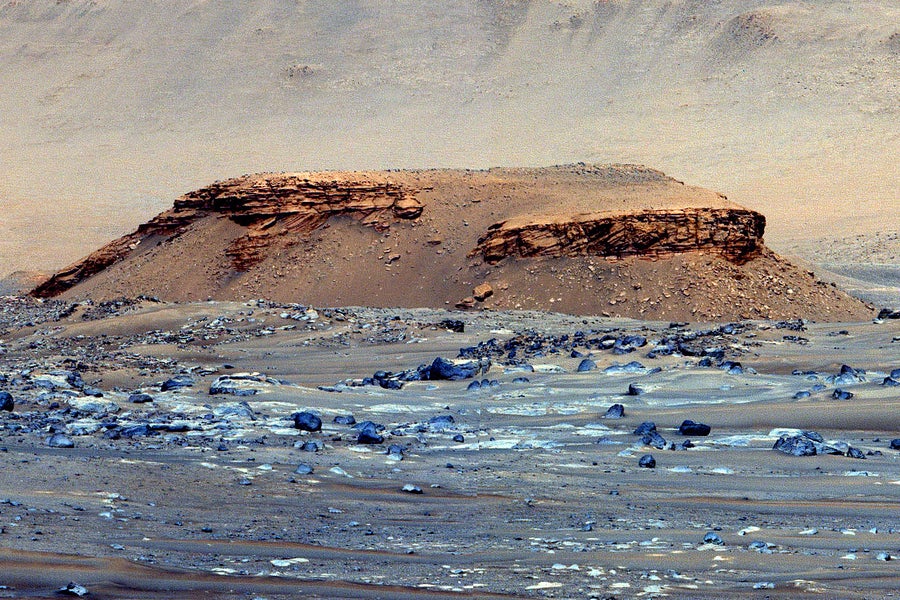
Perseverance discovered that the Margin Unit consists of altered igneous rock, not just ancient shoreline sediments.
The rocks show evidence of at least three distinct episodes of water activity, including interactions with groundwater and hydrothermal fluids.
This complex history enhances the astrobiological significance of the region, suggesting potential for preserving ancient life evidence.
NASA's Perseverance rover has unveiled a surprisingly intricate history of water in Jezero Crater, Mars, as it explored the Margin Unit in September 2023. Researchers initially expected to find sedimentary rocks indicative of an ancient lake shoreline, based on orbital observations that suggested strong carbonate signatures. However, the rover encountered predominantly olivine-rich igneous rock that has undergone significant transformations over time, revealing a more complex geological narrative than anticipated.
The Margin Unit, located along the inner western rim of Jezero Crater, spans hundreds of meters in elevation. Perseverance utilized its SuperCam to analyze over 185 bedrock targets, discovering that the upper layers of the unit are characterized by coarse, crystalline rocks rich in olivine, indicating a slow cooling process typical of igneous formations. In contrast, lower elevations displayed signs of extensive alteration by water, with olivine grains fractured and surrounded by secondary minerals formed from fluid interactions.
The study, published in Communications Earth & Environment, highlights at least three significant episodes of water activity. The first involved carbon dioxide-rich fluids that reacted with olivine, leading to the formation of carbonate minerals. Subsequent alterations included silica precipitation, suggesting a dynamic interaction between groundwater and potential lake water. The precise sources of these waters remain unclear, complicating the understanding of Mars' hydrological history.
The implications of these findings extend beyond geological interest; they are crucial for astrobiology. The presence of carbonate and silica minerals can preserve records of ancient environments, which may include evidence of past microbial life. The complexity of the Margin Unit's history indicates that it has served as a crossroads for various water systems, enhancing its potential as a site for future exploration and study.
Looking ahead, Perseverance has collected samples from the Margin Unit, which may be returned to Earth for detailed laboratory analysis. This could help determine the ages of the minerals and uncover microscopic textures that the rover cannot analyze directly. As researchers continue to investigate Jezero Crater, the findings underscore the need for a deeper understanding of Mars' watery past and its implications for the search for ancient life.